






























































































































































Useful Tips for Betting Odds Formats

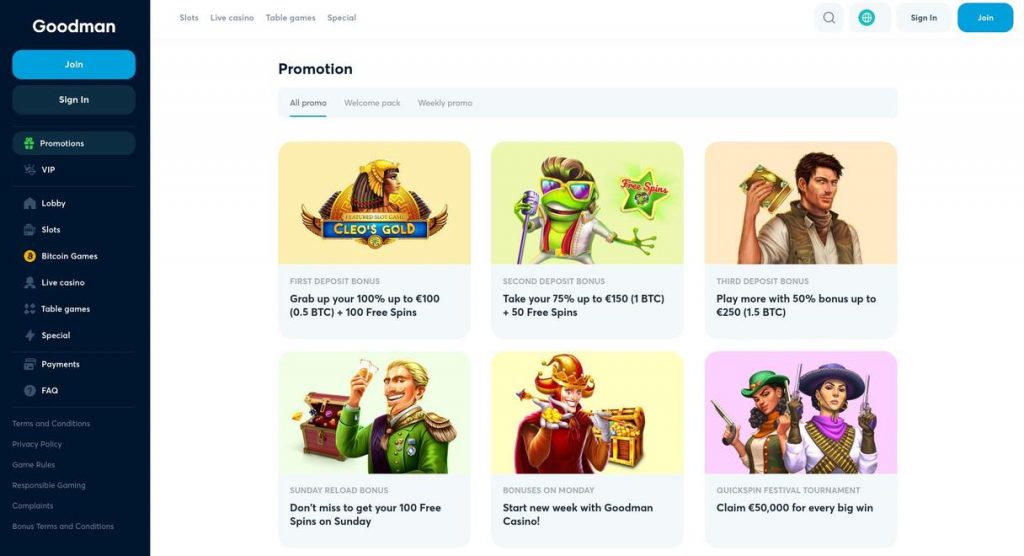
Too many Aussie punters stall when odds formats change from decimal to fractional to American on the same sportsbook screen. My first trip to Good Man Casino left me looking at those numbers like they were a secret code. Once I broke the code, I became a bettor who scans markets for fun instead of avoiding the board. Decimal odds are the simple European workhorse, fractions carry that old-school racing swagger, and American odds highlight underdog-versus-favourite drama. I’m here to provide practical, real-world tips that apply right now on goodman.win. By the time you complete reading, you’ll switch formats as naturally as you check the footy scores on a Saturday afternoon, and you’ll never let a puzzling price set back you a smart bet again.
Why Understanding Odds Formats Changes Your Entire Bet
Using one format just because it’s the app default is a leak that bleeds value goodmanaus.com. Mastery across all three lets you evaluate markets instantly and spot mispriced underdogs others miss. Odds aren’t just payout numbers; they’re probability estimates wrapped in maths. Decimal 2.50 tells me the market perceives a 40% chance, while fractional 6/4 shouts value if my own ratings indicate the true price should be shorter. American odds force me to stare at risk in dollar terms, which hones discipline fast. Once I dumped auto-converters and commenced reading natively, my strike rate improved. When you can mentally move formats mid-session on Good Man Casino’s live board, you stop being a passive consumer and turn into an active evaluator. That edge accumulates over hundreds of bets. Consider format mastery as a core skill, not a trivia trick.
Decimal odds: The Australian Punter’s Best Friend

Decimal betting odds are Australia’s default for a clear reason: they are brutally straightforward. I see 3.40 and realise right away a ten-dollar bet yields $34, including the stake. The real power, still, is understanding implied probability. Divide one by the decimal and multiply by 100: 1.80 means the market prices a 55.6% chance. If I assess that outcome at 65%, I’ve found genuine value. Parlay bets become a simple product of each leg’s decimal price, no fraction gymnastics required. During fast-paced live betting, decimals let my brain process updates in a fraction of a second while the ball is still flying. I suggest every Aussie begins with decimal as the foundation on Good Man Casino, then explores further. Once you can scan a cricket or AFL board and immediately assess value without a calculator, you’ll marvel why you ever squinted at fractions.
Fractional Pricing: The Classic Racing Terminology

Fractional odds still rule Aussie horse racing boards, and I confess 7/2 at one point made me feel like I needed a tutor. The key insight: the left digit represents profit, the right digit is your stake. So 7/2 means for every $2 you stake you collect $7, a combined return of $9 on a $2 outlay. I etched several of benchmarks into my brain. Evens (1/1) is equivalent to decimal 2.00. A 5/1 shot becomes 6.00. The bottom number instantly tells me the amount I’m wagering relative to the potential payout. During spring carnival, I compare runners across bookies that occasionally switch between fractions and decimals; this ease identifies differences casual punters ignore. And honestly, seeing 50/1 shown has more impact than 51.00. That emotional impact keeps me from throwing money on hopeless longshots. I maintain several reference points handy until the digits become second nature, then I don’t convert during the race, I simply read the quote and fire.
Fast Conversion Tricks That Actually Stick
Skip the massive charts. I lock in six fraction-decimal pairs and interpolate everything else:
- 1/4 (1.25): heavy chalk, 25c per dollar
- 1/2 (1.50): short-priced fav, 50c per dollar
- 1/1 Evens (2.00): 50% implied, pays twice your bet
- 2/1 (3.00): real possibility, three times your stake
- 5/1 (6.00): real longshot, significant danger
- 10/1 (11.00): longshot territory, roughly one in eleven
I spot 7/2 and put it halfway between 3/1 and 4/1, so about 4.50 decimal. That mental trick maintains my edge when live odds flash faster than a TikTok feed.
American Odds: The Dark Horse That Teaches Discipline
American odds confused me until I decoded the code: negative numbers indicate the amount I need to stake for a $100 profit, positive numbers represent my gain on a $100 wager. So -150 laying staking $150 for a $100 return, a clear favourite signal. A +250 underdog returns $350 total on a $100 bet. The $100 standard forces me to consider risk versus reward, which trains discipline better than any other format. I use American odds as a secondary view in NBA and NFL contests with Good Man Casino because the gap between -200 and -110 stands out immediately, but decimal 1.50 compared to 1.91 hardly registers. Converting to decimal is dead simple: for negatives, compute 100 over the absolute figure plus one; in positive cases, divide the number by 100 then add one. Once that clicked, American odds turned into my shield against betting at excessively low prices.
Real-Time Betting: Why Changing Formats Is a Superpower
Real-time markets on goodman.win demand rapid mental agility. During a cricket over, I remain in decimal for instant total-return maths on the next wicket. If an AFL underdog surges, I switch to fractional to assess if the favourite’s price drift has stretched far enough for value. American odds are my preferred for NFL spread betting because that’s how sharp US money perceives the risk profile, and I want to see what they’re seeing. The real edge stems from matching the format to the sport and bet type. Singles excel in decimal, each-way racing bets feel more intuitive in fractions, and futures shine with American plus-numbers that make long-shot payouts simple to compare. I set my default to whatever format I process fastest, then deliberately train the other two in low-stakes sessions. After a month, instinct takes over and live betting stops being guesswork. It transforms into a genuine edge.
Developing a Format Strategy That Delivers Results
My system combines simplicity with flexibility. For AFL, NRL and cricket, the Aussie staples, I set Good Man Casino to decimal. I can browse dozens of markets without slowing for arithmetic. On racing days, especially the Spring Carnival or a metro Saturday, I move to fractional because the form guides, broadcasters and track-side boards all use that language and it aligns my thinking with the market. For international sports like NBA, NFL and golf majors, I switch American; the standardised $100 baseline makes assessing props and line bets effortless. The golden rule: I never flip formats mid-streak in the same session because it scrambles my brain and invites costly mistakes. I also review settled bets in the same format I placed them, solidifying the link between the number I saw and the outcome. This isn’t about bragging. It’s about safeguarding my bankroll and executing faster, sharper decisions when every second counts.
Odds mastery doesn’t require genius. It demands consistent practice, a bit of discomfort and the discipline to stay with one format until it solidifies. My betting transformed from calculator-clutching to instinctive once I conditioned my eye to read prices natively. Good Man Casino pays off for the punters who comprehend the numbers, and you’ve now got the roadmap to accompany them. Build your base in decimal, weave in fractions for the racing seasons and refine risk assessment with American odds on international fixtures. The payout isn’t just bigger returns. It’s the steady confidence of understanding exactly what every price means the instant you spot it. That confidence transforms how you approach every single bet.

